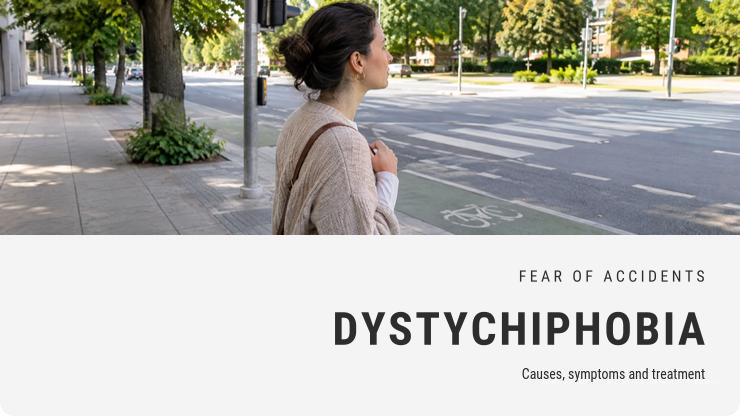
Dystychiphobia is an intense fear of accidents. Your friends suggest a bike ride on a quiet path. You’d like to go, and you know how to ride, but you start picturing a collision before you’ve even left the house. Later, you turn down an invitation to go ice skating for the same reason. The activity changes. The thought that someone might get hurt stays.
It can involve concern about causing an accident, being injured yourself, or seeing someone else hurt. Taking reasonable care around traffic, tools, and other hazards is part of everyday life. The fear may be a phobia when it extends well beyond the risk and repeatedly interferes with activities you want or need to do.
What kinds of situations can set it off?
For some people, the fear is strongest when they’re a passenger and can’t control what the driver does. Others worry about slipping on a flat trail, dropping something while they cook, or losing their balance on a short step stool. You might also become uneasy when someone you love leaves for an ordinary trip and you can’t see whether they’re safe.
A clinician can learn a lot from which situations feel similar. Someone who is frightened only when driving may need help specific to driving. A person afraid of accidents may have the same worry when a child plays sports, when a friend rides a bike, or when they use equipment at home. They may be able to describe the same feared outcome across different situations.
Causes and contributing factors
It can start after a crash, injury, or close call, or after someone you know is hurt. The part you remember may be how quickly an ordinary situation changed. A news story about an accident can also bring up the feeling, especially if you picture it happening to you or someone close to you.
Avoiding a situation can bring relief and make sense when there’s a real hazard. When the activity is low risk, avoiding it again and again can leave you with few chances to see how it usually goes. You might become so used to asking someone else to do a task that it starts feeling riskier when you try to do it yourself.
Symptoms and everyday effects
You might take a long detour to avoid a crossing you’ve used safely before or spend an evening checking on a family member who’s on the road. At home, you might stop helping with small repairs even when someone can show you how to do them safely. The costs can add up as you turn down social plans or depend on other people for ordinary tasks.
When fear comes on suddenly, you may notice a racing heart, sweating, nausea, or an urge to leave. Sometimes the effects are quieter. You may spend so much time planning for several possible mishaps that you never begin the activity you were trying to prepare for.
How is dystychiphobia assessed?
A clinician may ask what you fear will happen, when the fear began, and which activities you’ve changed. They can consider both the actual risk and how much your response disrupts your life. Bring examples from different settings if the worry follows you. That can help explain why a plan for one situation, such as getting back behind the wheel, might only address part of the problem.
If the fear followed an accident, tell the clinician if you also have nightmares, intrusive memories, or distress when something reminds you of the event. That information can affect how they assess the fear and what kind of support they suggest.
Treatment and support
Start with one activity you want to be able to do. If you’ve stopped going for short bike rides, you might work with a therapist to plan practice in a safe area with the usual gear and precautions. An early step could be going to the trail with someone you trust and walking a familiar stretch. Later, you might ride part of the same route under ordinary safe conditions.
Exposure therapy for specific phobias uses manageable steps. It doesn’t require putting yourself in danger or ignoring protective equipment, training, or safety rules. A therapist can help you separate the precautions that make sense from the extra steps you take solely to quiet the fear.
Write down the activity, the accident you imagine, and what you currently do when the worry appears. If you seek support, this gives you a concrete starting point.