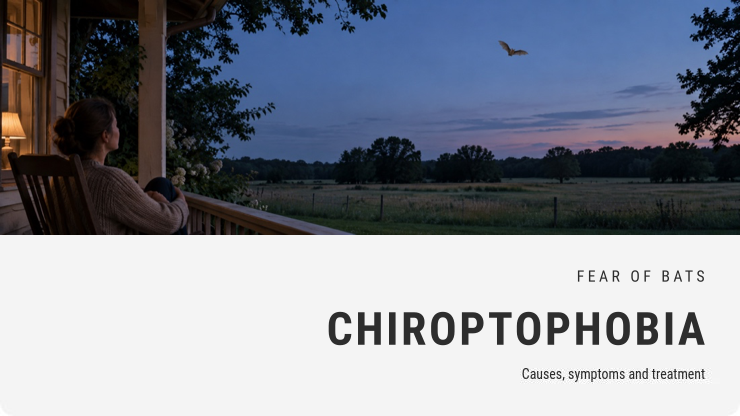
You’re sitting outside at dusk when you see a small animal fly past. A friend tells you it’s a bat catching insects. You haven’t been touched, but you go inside and spend the rest of the evening wondering whether you can use the porch at that time again.
Chiroptophobia is a name for intense fear of bats. It may come up when you see one, notice movement at dusk, or think a bat might be in a building. Bats are wildlife, and contact can call for specific health advice. Fear may need separate attention when it affects ordinary activities even in situations where there’s no reason to expect contact.
What do you expect when you see a bat?
Some people are afraid of the way bats move in low light. Others worry that one might enter their home, get close to them, or be hard to see in time. You might be comfortable looking at a photo and react strongly to a bat flying at a distance. Someone else may feel uneasy around any shadow or movement at dusk because they aren’t sure what caused it.
Think about whether your fear is mostly about the animal itself or about what you would do if there were possible contact. Those are different questions. If you may have been bitten, scratched, or otherwise exposed to a bat, contact a healthcare professional or public health department promptly. The CDC has guidance on how to respond. Don’t handle a bat yourself. If a bat was in a room with someone who was asleep or unable to say whether they were touched, tell the healthcare professional or health department about those circumstances. They can assess what happened and whether further action is needed.
Why can the fear continue after you go inside?
An unexpected encounter can leave you watching for more movement long after it’s over. A previous experience with an animal indoors may be especially hard to forget. You may also have learned to expect danger from stories or warnings. Some people can’t identify a particular event and notice the pattern because they no longer do activities they used to enjoy.
It’s useful to have a clear plan for a genuine encounter, including whom you’d contact if a bat got into a room. If you repeatedly check windows or avoid being outside when there’s no sign of a problem, notice what you expect each check to accomplish. That gives you something to discuss alongside the practical plan.
How can it change your routine?
You might avoid an evening walk, keep curtains shut at dusk, or decline a trip because you think you might see bats. Some people spend so much time watching the sky that they miss what others are saying. Others find it difficult to sleep because they keep listening for a sound even after they’ve addressed a practical concern about the building.
Pick one activity you’d like to do more comfortably. It could be sitting on a screened porch or watching a nature program without immediately leaving. You can choose a goal that doesn’t involve approaching wildlife. The example helps a clinician see where the fear affects you most.
How is chiroptophobia assessed?
A clinician can ask when the fear started, how long it has persisted, and whether it comes up around bats at a distance, images, or simply the possibility of seeing one. They can ask how you respond and how much it interferes with life. If your main concern is rabies or another health risk, tell them what you know about any actual exposure.
A mental health clinician can consider whether the pattern fits a specific phobia, a trauma-related reaction, or broader health anxiety. The term chiroptophobia describes the trigger. Assessment can help distinguish a fear that persists around low-risk reminders from a situation that requires a health or wildlife response.
A first step without contact with bats
If a therapist recommends gradual exposure, you could start with an agreed photo or short video. A later step might involve an ordinary outdoor activity in a place you already know. Follow public health and wildlife guidance, and keep appropriate distance. There’s no need to enter a roost, handle an animal, or try to resolve a bat inside a building as a way to practice.
Write down what you expect will happen in one safe setting and what you want to do there. A clinician can help you work with the fear while keeping a clear plan for the situations that call for actual action.