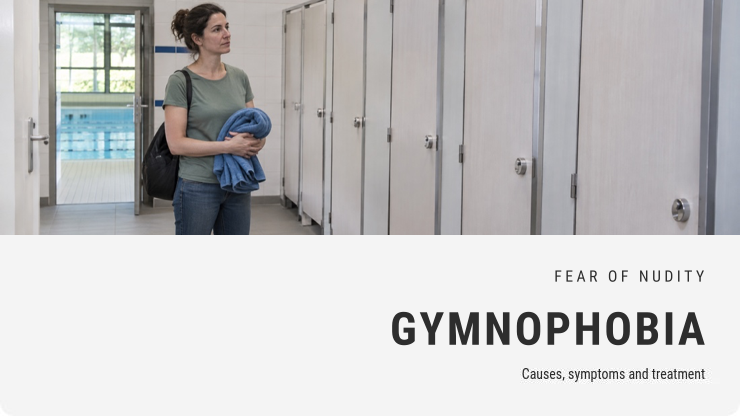
Gymnophobia is a name for intense fear of nudity. You’ve found a pool that offers the lap swim you’ve wanted to try. When you get there, you see that people change in a shared locker room. You could use a private stall, but the thought of taking your clothes off there still makes your heart race. You leave before you’ve had a chance to get in the water.
It may involve being undressed yourself, seeing another person undressed, or both. Many people prefer privacy while changing, and what feels appropriate depends on personal and cultural boundaries. The fear becomes worth discussing when it causes considerable distress or gets in the way of activities you want to do or care you need.
What feels threatening about being undressed?
For one person, the fear comes from imagining someone seeing them while they change. For another, it happens even in a room they know is private. Seeing an undressed person in a locker room or a figure in an art class can also bring on fear for some people. How you react to different settings can clarify whether the nudity itself is frightening or whether you’re afraid of something you expect to happen.
Ask what would change if you had a private stall, knew nobody could walk in, or could remain partly dressed. If those options help, use them. You can also pay attention to what still feels difficult. Someone worried about criticism may feel similarly exposed while fully clothed. Someone who has had their privacy violated may be particularly sensitive to being surprised or losing control over who can see them.
Causes and contributing factors
Past experiences of being mocked, having boundaries ignored, or feeling exposed in a vulnerable setting may matter. You might remember a specific incident or a pattern of comments that made it hard to feel at ease. There may be no clear beginning. A clinician can discuss what the fear is like now, even if you prefer to leave earlier experiences for another conversation.
Avoidance sometimes grows slowly. A private stall may let you do what you want with an appropriate level of privacy. Skipping every swim or avoiding a medical appointment you’ve been meaning to make may leave you with fewer ways to get on with your day. The difference is whether your choices help you participate on your terms or whether fear keeps taking those choices away.
Symptoms and everyday effects
You may change at home before going to the gym, avoid an overnight trip with friends, or dread an appointment because you might be asked to remove clothing. You may feel tense or nauseated even as you read instructions about changing into a gown. Some people think through the same possible embarrassment for hours before an event. Others feel relatively calm until it’s time to make a decision.
You can talk about the practical issue without disclosing more than you want to. If a medical visit is coming up, you might ask which parts of the exam require changing and whether you can stay covered until a particular area needs to be examined. A clinic can explain its privacy and chaperone options and help you plan ahead.
How is gymnophobia assessed?
A clinician may ask when the fear occurs, how long it has lasted, and whether you avoid situations that would otherwise matter to you. They may also ask how your reaction changes when you’re in private and in control. The answers can help distinguish a possible specific phobia from anxiety about being judged, body image concerns, or reactions connected to a traumatic experience. It’s also important to take current safety, cultural practices, and personal preferences into account.
You can begin with a simple example, such as wanting to go swimming but finding any change of clothes away from home overwhelming. Say which accommodations would help you feel comfortable enough to discuss the issue. You can decide how much to share and ask the clinician to explain any step they suggest.
Treatment and support
If a therapist suggests cognitive behavioral therapy with gradual practice, you and the therapist can agree on a goal and the steps you’re comfortable taking. For example, you might tour the pool while fully clothed, find the private changing area, or practice making a request about privacy before a medical visit. If the fear follows trauma, your clinician can talk with you about care suited to that experience. Working on fear never requires someone else to see you undressed.
Choose an activity you miss and think of one change that would make it easier to try. You may decide to call the facility to ask about a private changing space or tell a clinician in advance what you need during an exam. That lets you work on the part of the situation that’s limiting you while keeping your boundaries in place.