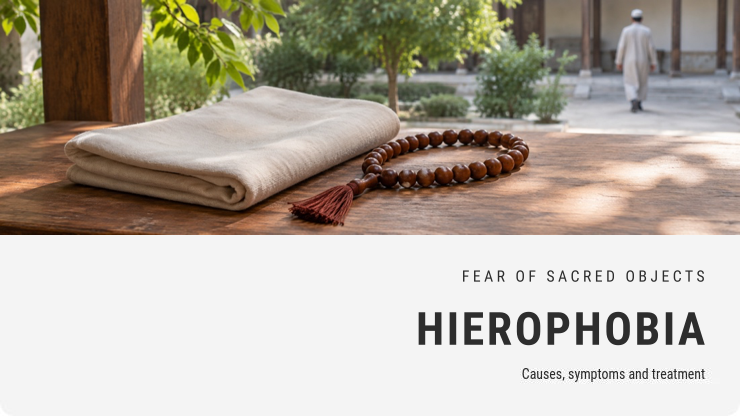
Hierophobia is a name used for intense fear of sacred objects. A friend shows you a small object that’s meaningful to their family. You know they’re only telling you about it, but you feel tense as soon as they place it on the table. You’re comfortable in the room and with the people there. You feel an urge to leave because the object is present.
It may come up around religious images, objects used in worship, or items treated with special respect in a tradition. Reverence, personal boundaries, and decisions about what you participate in are part of the context. A person may want help when fear makes everyday situations distressing even though they can respect those boundaries.
What is frightening about being near the object?
For some people, a sacred item brings to mind a rule they’re afraid of breaking. Another person may be afraid of a memory the object brings back. You might be fine with an ordinary object of a similar shape and distressed when you know it has a religious use. Someone else may react to the appearance regardless of what the item is used for.
Think about whether the fear comes up mainly in a particular place, with a particular person, or with the object in an otherwise ordinary setting. If the concern is about a symbol, an upsetting experience, or something you fear might happen to you, mention that. The details can help a clinician understand why the encounter feels different from others.
Causes and contributing factors
An object can be a reminder of a rule, a ceremony, or an experience. You might remember being criticized or frightened in its presence. Some people have a strong response without a clear memory of how it began. You may notice that the fear has spread to similar objects or to situations where you only expect to see one.
Avoiding an object may fit your beliefs or a host’s request. If it also means leaving settings you would otherwise choose to use, notice what you feel unable to do. For example, you may want to visit a family member and feel tense throughout the visit because an object is on display. That experience can be discussed separately from whether you wish to participate in a practice.
Symptoms and everyday effects
You might avoid a room, turn down a visit, or spend time checking what will be on display at an event. Some people tense up when they see an item and keep thinking about it afterward. Others worry they will do something disrespectful even when they know what is expected of them. You may find it hard to explain the fear because the object means something different to the people around you.
Choose one example and describe what you wanted to do. You might want to stay for a meal or be able to enter a public building without needing to check every room. A clinician can use that goal to understand what the fear takes away from you.
How is hierophobia assessed?
A clinician may ask which objects are involved, when the fear started, and how much distress or avoidance it causes. They can ask what the item means to you and whether the reaction is linked to an upsetting memory, an unwanted thought, or a repeated action. They should take into account cultural and religious practices and whether a setting feels safe.
The term describes what brings on the fear. A clinician can consider whether the pattern fits a specific phobia or whether trauma, obsessive-compulsive symptoms, or another concern is a better explanation. You can talk about the situation without bringing an object to the appointment. You might describe whether you’d react to a photograph, an ordinary replica, or only the item itself. That can help explain what significance the object has for you.
Treatment and support
If you want help, begin with an activity you’d like to do and the conditions that would make it possible. A therapist can help you plan a small, agreed step. If they recommend gradual exposure, you can choose an appropriate image or setting. You don’t need to handle a sacred object, take part in a ritual, or change your beliefs to work on the fear.
For example, you might want to attend a relative’s ceremony while remaining outside a ritual you do not follow. Ask about seating and expectations, explain your boundary, and choose whether to attend. If appropriate, a therapist can help you stay for the part you value while feeling uncertain. Nobody needs to break a religious rule for this exercise.