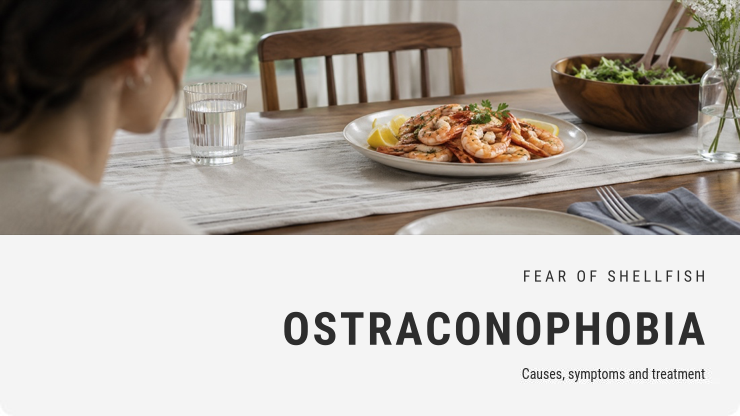
Ostraconophobia is an uncommon descriptive name for intense fear of shellfish, rather than a diagnosis established by the name alone. You’re about to sit down for dinner when you notice shrimp on a plate at the other end of the table. You’re planning to eat something else, but you feel tense and have trouble joining the conversation. The next time friends suggest the same restaurant, you look for a reason to skip it.
It can arise at the sight of shellfish, while handling or cooking it, or when you expect to encounter it in a meal. Shellfish allergies and ordinary food safety can call for specific precautions. Fear can also be a separate concern when it persists in situations that are appropriate for you.
What part of the encounter is frightening?
You might feel uneasy looking at the shape of a crab, even when it’s cooked or pictured in a book. Another person may be most afraid of the smell, texture, or possibility of tasting it. Someone who is comfortable with the food at a distance may fear eating it because of a previous illness. Some people react only around a particular type, such as shrimp or lobster.
Ask yourself which part you’re worried about and what you think would happen. If you have a diagnosed allergy or suspect one, consult a qualified healthcare professional and follow their advice. You may need to know how food is prepared and what other foods it contacts. If you feel distressed by a picture or by a menu even when you won’t handle or eat anything, that can be useful to describe separately.
The American College of Allergy, Asthma and Immunology’s shellfish guidance explains that reactions can follow cross-contact with other food, and some sensitive people can react near shellfish being cooked. Ordering a different dish does not automatically make a restaurant suitable. Ask an allergy clinician which foods and settings to avoid, how to explain preparation needs, and what emergency plan to carry. Shellfish and finned-fish allergies are different; do not test another type of seafood yourself to find out whether it is safe. Those precautions remain in place while anxiety care addresses medically appropriate situations.
Causes and contributing factors
An unexpected encounter, a previous reaction, or a meal that made you feel ill may affect what you expect the next time. You may not be sure which part of the experience stayed with you. Some people remember being pressured to eat something they didn’t want. Others can’t recall a particular event and notice the pattern only after they start avoiding places.
If you avoid a restaurant or meal for a reason that fits your health needs or preferences, that choice can stand. If you’re giving up activities you’d otherwise like because you can’t manage even a low-risk reminder, describe what you expect will happen. The difference can help when you discuss your goals.
Symptoms and everyday effects
You might take a different route through a grocery store, avoid cooking with someone who eats shellfish, or have trouble attending a family meal. Some people feel tense even when food options have already been discussed. Others spend a long time checking menus or asking questions after they already have the information they need.
Think of an example that shows what you want back. It might be joining friends at a place that meets your needs, or shopping without having to leave when you see a seafood display. You can work toward more choices without deciding that you’ll ever want to eat shellfish. If you’ve already found places that work for you, explain what’s different there. For example, you may feel comfortable when you order first and have time to ask a question.
How is ostraconophobia assessed?
A clinician may ask what types of shellfish are involved, what you expect to happen, and whether the fear comes up before, during, or after an encounter. They may ask about allergies, previous illness, reactions to textures, and other fears about food. If eating has become very restricted or you’re missing meals, bring that up. A healthcare professional can help you decide how to address nutrition and safety.
A mental health clinician can consider whether you’re dealing with a specific fear, health anxiety, a distressing memory, or another concern. The term ostraconophobia describes the trigger. It doesn’t tell you whether exposure to a particular food is medically appropriate.
Treatment and support
If gradual practice is appropriate, you could start with an agreed photo, look at a menu, or join a meal at a place that meets your dietary and safety needs. Practice can focus on being present for the part of the activity you want. It doesn’t require eating shellfish or setting aside allergy precautions.
Write down which situation stops you and what you believe could happen. Ask a clinician to help you identify the practical safeguards that apply and the part that is mainly about fear. That gives you a way to work on the routine without changing the foods you choose to eat.