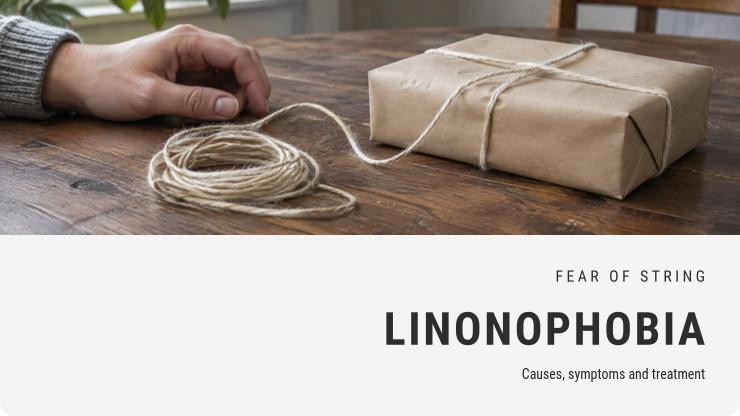
Linonophobia is a name for intense fear of string. You sit down to wrap a package and pull out a spool of twine. When the loose end uncoils across the table, you feel your stomach tighten. You put the spool away and use tape instead. A few days later, the sight of a fraying drawstring on a sweatshirt brings up a similar feeling.
Yarn, thread, twine, and other string-like objects may bring on a reaction depending on what a person fears about them. The label describes a trigger. The details of the reaction and how it affects your life matter more when you’re deciding whether to seek help.
What do you notice when you see string?
For some people, seeing a tangled pile of thread is enough to feel distressed. Another person might be comfortable near a spool but anxious when the loose end moves or gets close to their hand. You may worry about it winding around a finger, or find the texture of certain fibers hard to tolerate. If you react only to a cord near your neck or to the idea of being tied up, tell a clinician. Those situations can involve different fears from seeing loose string on a table.
Try comparing an object you avoid with a similar one you use comfortably. You might be able to wear shoes with laces but stay away from balls of yarn, or handle smooth ribbon more easily than rough twine. That detail can help pinpoint whether the material, movement, or thought of entanglement brings on the fear.
Causes and contributing factors
An incident involving a tight knot or a sudden snag might make a similar object feel alarming later. For some people, the fear comes up around a sensation they can’t readily describe. You may never identify a first encounter. It’s possible to begin with the example you remember best and look at how the reaction happens now.
If you ask someone else to handle the string every time, you may feel better right away. That can be convenient on some occasions. If it becomes necessary for nearly every encounter, you get fewer chances to find out what would happen if you stayed near the object. Over time, you might start noticing string even in places you used to find comfortable.
Symptoms and everyday effects
Clothing tags, tea bags, parcel ties, and craft supplies can all put string in your path. You may turn down an activity with your children or avoid doing a small repair at home. If you encounter string unexpectedly, you might tense up, feel queasy, or find it hard to focus until you move away. Some people can use the item but feel anxious long before they have to deal with it.
There’s usually no need to make a special trip to find a trigger. Think about the last time you changed a plan because of the fear. What did you want to do, and when did it start to feel difficult? A clear account of one event can be more useful than a list of every kind of string.
How is linonophobia assessed?
A clinician may ask how long the fear has been there, what you avoid, and what happens when you try to handle a routine task. They can ask whether the same reaction comes up with other textures or whether you’re afraid of being restrained or injured. If you spend time repeating checks or trying to get rid of intrusive thoughts, mention that, too. It can help them identify which type of support is a good fit.
An assessment can consider whether the fear is persistent and out of proportion to the situation, and whether it causes significant distress or interferes with your life. Ordinary precautions still apply, especially around items that can tangle or pose a hazard to children or pets.
Treatment and support
A therapist may suggest cognitive behavioral therapy with gradual, agreed exposure. An early step could be seeing a photo of short twine or sitting at a table where a piece of it lies flat at a comfortable distance. You can work on the part that bothers you, such as being near it or seeing the loose end move. Practice can use safe, ordinary objects and should respect personal boundaries.
For opening a parcel, distinguish fear of a loose end moving from discomfort with the twine’s rough texture. You might first look at a short, loose piece resting on a table, then choose an ordinary unwrapping task with suitable help or tools. Touch is optional, and nothing should be tied around your body. This is an example to adapt with support, not a fixed ladder or timetable.