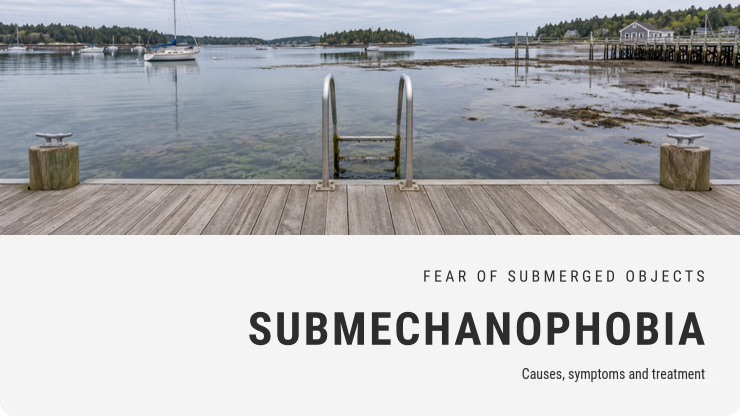
You’re standing on a dock with friends when you notice a metal ladder disappearing into the water. You can see where it’s attached and know you’ll be staying on land, but you take a few steps back. Later, you find yourself uneasy looking at a photo of a sunken car. It isn’t the size of the object that matters. It’s seeing something made by people partly or completely underwater.
Submechanophobia is a name used for intense fear of submerged man-made objects. It can involve ladders, chains, pipes, equipment, or wrecks. Some people react when an object is completely submerged. Others are most afraid when part of it is visible and they can only imagine the rest. The name describes the trigger rather than a separate medical diagnosis.
What changes when the object is underwater?
You may be comfortable using a ladder on land and feel distressed when it extends below the waterline. Another person may react to the way an object moves with the current or seems distorted through the surface. You might be most afraid when you can’t tell how far an object extends, or when you think you could brush against it without warning.
Think about whether deep water is frightening even when there are no objects. Are you comfortable near a quiet lake until you notice equipment under the surface? Would a photograph bother you while a similar object on land would not? The comparison can help explain how the fear relates to water, size, or machinery.
Causes and contributing factors
An unexpected object encountered while swimming can make a later sight feel threatening. You might remember feeling something beneath your feet or noticing a structure where you didn’t expect one. A photo or scene in a film can also bring up a strong reaction. Some people can’t remember how the fear began and discover it in places they used to visit comfortably.
Moving away is sensible around unknown underwater objects. They can pose hazards, and local signs and rules matter. If you feel afraid from a safe viewing area or while looking at an image, describe what you expect will happen there. That is a different situation from being in the water.
Symptoms and everyday effects
Seeing a chain disappear under the water might bring on a racing heart, tense muscles, or an urge to back away. The fear can come on while you’re standing on dry land or looking at a picture.
You might avoid a marina, turn down a museum visit, or stop walking a route that passes a submerged structure. Some people can stay on the dock but spend the whole visit looking for signs of something below the surface. Others avoid photos or games that show underwater equipment, even if they have no plans to get near it themselves.
Choose one setting you’d like to use more comfortably. It might be meeting friends at a waterfront café or walking on a public path without needing to check the water. You can decide which activities are worth working on and which you simply don’t want to do. For example, staying to finish a meal with friends may matter even if you’re happy to avoid swimming or diving. The goal can be staying engaged in that meal.
How is submechanophobia assessed?
A clinician may ask what objects bring on fear, what changes when they’re partly visible, and how long it has affected you. They can ask whether you expect to get caught, fear the object’s movement, or react to the sight before you can say why. They can also consider past events, motion or balance concerns, and whether similar fear occurs around natural objects in water.
The label can help you describe the pattern. A clinician can assess whether it fits a specific phobia or whether another concern is central. Bring an example that shows how the fear affects an activity and one where you can be around water or a similar object comfortably.
Treatment and support
If a therapist recommends gradual exposure, an early step may be looking at an agreed photo, with control over when you stop. Another step could be viewing a known structure from a public overlook, where you don’t need to step into the water. Follow site rules and stay away from unknown structures and restricted areas.
You might write down what you expect when you see part of a ladder underwater and what you want to be able to do afterward. A clinician can help you practice with that specific reaction without putting yourself in the situation you’re trying to avoid.