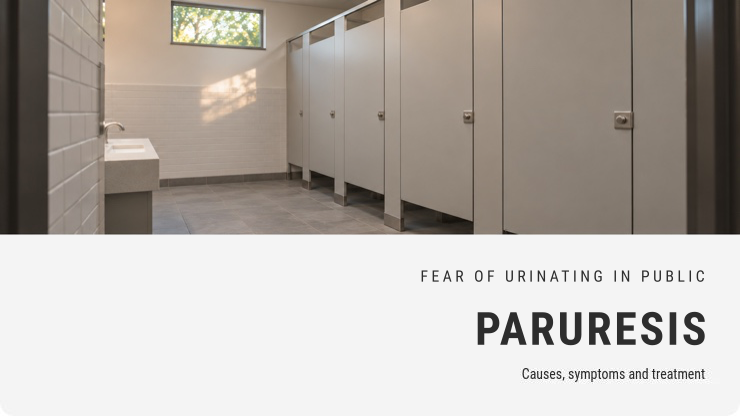
Paruresis, also called shy bladder syndrome, is difficulty urinating when you feel that other people are nearby or might notice you. You have to urinate, but the moment someone walks into the restroom, you can’t. You might wait in the stall until they leave, then find yourself listening for the next person to come in. Once you get home, you can go without a problem.
It can be a form of social anxiety. Preferring a private restroom is common. Paruresis can disrupt your day when the fear repeatedly makes it difficult to urinate where you need to.
What can trigger paruresis?
A busy restroom at an airport may be difficult because there is a line. At work, the fear might center on being heard by someone you know. An open row of urinals can feel too exposed, while a stall with a lock or a single-user restroom may feel easier. Sometimes it is enough to know another person is in the room, even if they cannot see you.
The pattern can be surprisingly specific. You might be fine when you are the first person in a restroom, then find it impossible to start when someone walks in. Other people can go in a stall but struggle if they are asked to provide a urine sample within a set time.
What causes paruresis?
There is no single cause. A humiliating experience in a restroom, being rushed or teased as a child, or a broader fear of being judged may contribute. Some people cannot point to an event that started it. After one difficult experience, the next visit can feel like a test. Listening for the door to open or thinking about how long you have been there can make it harder to relax enough to urinate.
Leaving the restroom often brings immediate relief. Over time, that relief can make it harder to return. You may start planning around when you can get home, even in places you used to visit without thinking about the restroom.
Symptoms of shy bladder syndrome
The main sign is repeatedly having trouble starting to urinate when others are nearby or might come in. You may have a strong urge to go, yet only pass a small amount or leave without being able to go at all. Your heart may race, or you may feel hot, tense, or embarrassed. It can become difficult to think about anything else until you are somewhere more private.
On a road trip, that might mean drinking less to avoid stopping. At school or work, you may wait until a restroom is empty, cut a visit short, or pass up an event because you cannot count on having privacy. The effect on those everyday choices is worth discussing even if you can manage in some public restrooms.
How is paruresis assessed?
A healthcare professional can ask when the difficulty began, where you can urinate comfortably, and whether it also happens when you are alone. They may ask about your urine stream, pain, medicines, and other health conditions. Depending on your symptoms, they may recommend an exam or tests to check for a medical cause. A clinician can also ask whether fear of being heard or judged comes up in other situations.
Tell the clinician if you are able to urinate at home but cannot do so at a clinic or in a busy restroom. Difficulty urinating even in private deserves medical assessment. If you suddenly cannot pass urine or have severe lower abdominal pain, seek medical care right away.
Treatment for paruresis
Cognitive behavioral therapy can help you notice predictions that raise the pressure, such as assuming that someone waiting outside will think badly of you. A therapist may suggest gradual practice in settings you choose together. The starting point might be a familiar single-user restroom when you naturally need to go. A busier setting may come later, after you and the therapist have discussed what makes the earlier step manageable.
Treatment should account for privacy, past experiences, and any medical advice. Avoid deliberately holding urine for long periods or drinking large amounts of water to force practice. If you need to provide a urine sample, tell the office beforehand that this is difficult for you and ask what arrangements it can offer.
Start with one situation you want back
Pick a concrete goal, such as getting through a workday without waiting until you get home, or being able to take a road trip with planned stops. For a few days, note where it was easier or harder to go and what changed between those places. The distance of other people, the sound level, and whether you felt rushed can all be useful clues to bring to an appointment.